-
Correct, the cam lobe is not circular until it gets elongated. And yes, you want to measure the clearance when the gap is the largest, or with the lobe at 180 deg from the valve. You do not need to be overly fussy about being EXACTLY 180. But you do want it to be close.Leave a comment:
-
i have a question about measuring the gap.
In the beginning, I measured the gap whenever the pointy part of the lobe isn't touching the shim. So, for some valves, the pointy part is facing exactly opposite away from the valve (so, 180 degrees), while some are just facing "90 degrees away." Then I did my calculation and replaced with new shims. Now, after the replacement, i re-measured and found out quite a few valves didn't come out as expected / within spec, i double checked the math and it still didn't make sense.
So, after fiddling a while, I find out the lobe has tighter clearance when it is just pass touching the valve shim, and the clearance/gap increases as i turn the crankcraft and the pointy part is "180 degree away." The gap then reduces as it is pass the 180 degree spot, and getting closer back to touching the valve shim.
So I suppose the fatter side of the lobe is not a perfect circle then?
and I should use the LARGEST clearance number as base right?

Leave a comment:
-
As you run the engine the valve slams against the seat, each time it wears on the seat going in a little more each time. In turn it raises the bucket a little more which closes the gap between the lobe and the shim.Leave a comment:
-
Quick questiong guys if I may
I still cant figure out why, as the engine wears, the valve clearance decreases?Leave a comment:
-
-
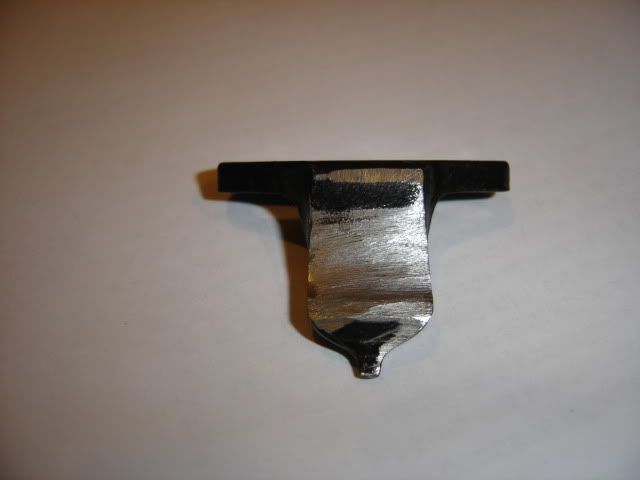
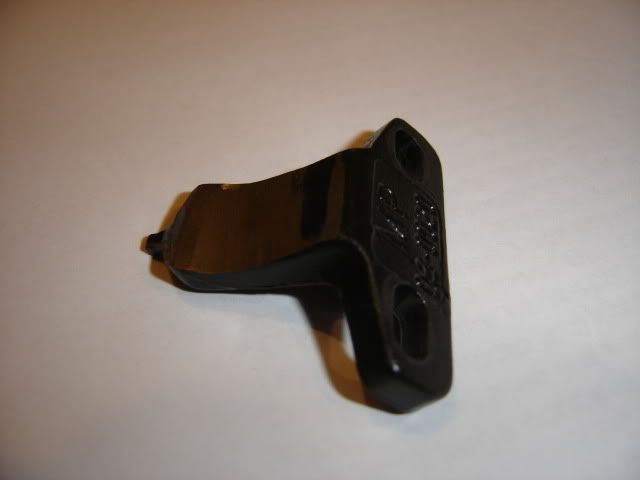
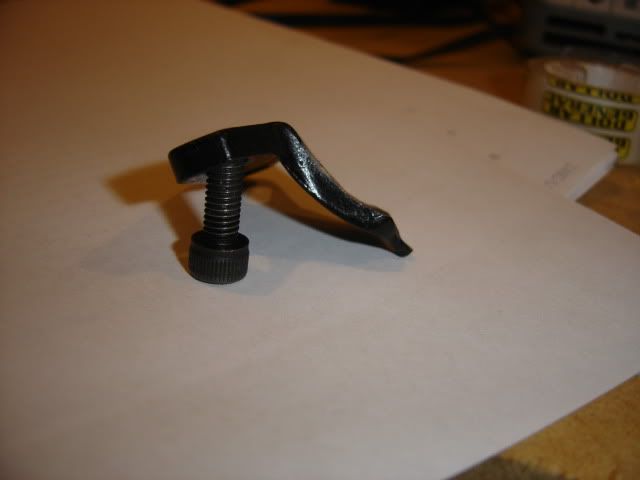
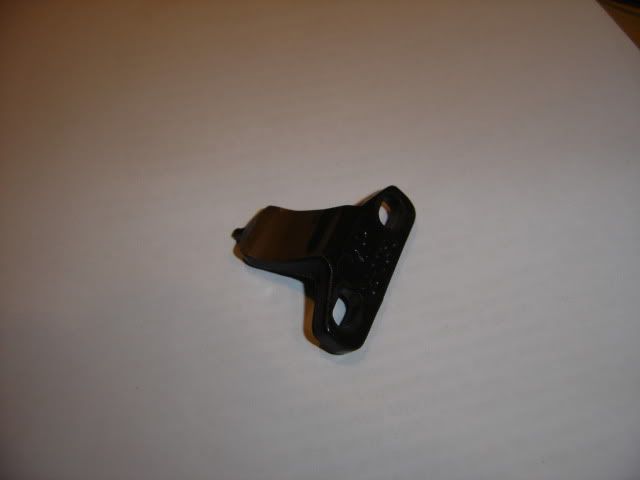
I had to grind...
...mine also, and Yes, it did contact the cam. I tried for a long time to make sure I wasn't doing something wrong, put it down, did some more reasearch and found others also had to grind theirs so this is what worked for me, and I will say after the modification of the tool it worked well It also works on my '83XJ 750 as I swapped shims between my '80G and the XJ 750 and I only needed a couple from the library to get both bikes back in spec.
Here is a look at where I had to clearance my tool...
Leave a comment:
-
Yesterday I shimmed 5 of 8 on my SF, one exhaust and all on the intake. I got lucky having several of the needed shims from my KZ900 parts laying around. I used DGSXER's method of removing the CCT and loosening the cam caps, as well as Steve's tips. I think petejw's suggestion of just loosening the CCT may have been a good way to go too.
As for the MP tool, I guess maybe I was using the tool incorrectly. The KZ shim tool, which works great (on Z engines), actually depresses the bucket, which is what I tried to do with the MP tool. Should I have depressed the bucket with the cam lobe, then held it with the MP tool? Even so, the example of the MP tool that I have puts the tip 1/8" south of the bucket.
I also found that I have a repair area at the #2 exhaust shim spot on the head. Spit shim or ham handed shim tool use? I found silicon inside the cam cover :-( and a cracked cam cover at this area. I also have noticed oil residue outside. Someone trying to torque down the cover to stop the leak.I just picked up a replacement cam cover, and wondered if I should put a thin bead of RTV gasket sealant in this area. The head "looks" flat placing a straight edge across the repair, but obviously it's not. This bike was a low mileage but rough project, and I'm still getting to know her.
Thanks to everyone for sharing their knowledge/opinions here at Channel 11!Leave a comment:
-
special
I use the motion pro tool too to do my shims did take me a while as i had to adjust all 8. The first time i used it i thought there was something wrong but it turned out to be just the operator.Leave a comment:
-
-
-
Heads
I know there were some changes in head castings over the years, dont know if that matters, mine is OEM 79SF, it takes some getting used to, but works fine once you only open the valve 1/4" or less
Leave a comment:
-
I didn't have any problems with it contacting the camshafts. Mine just wouldn't push the cam buckets down far enough to provdie enough clearance to remove the shims. Grinding on the bottom face, the surface that would contact the cylinder head, allowed the tool to sit lower and push the bucket down further.Leave a comment:
-


Leave a comment: